
Circulor img main

Circulor

Making battery supply chains auditable at every stage

Circulor tracks battery materials from extraction to assembly line, giving manufacturers real-time visibility into where their materials come from, how they are processed and what emissions they carry at each stage.

Circulor img 2
Circulor img 3
Their mission
Make complex supply chains transparent and fair
Challenge
Reducing emissions
HQ
London, UK

Their UVP

Circulor assigns a digital fingerprint to each material batch and logs every supply chain event on a blockchain: every handover, every transformation, every emission calculated from inherited upstream data. The result is a chain of custody that regulators, institutional investors and procurement teams can audit and act on. The platform has the deepest operational track record in battery materials, tracking lithium, cobalt, manganese, nickel, graphite, copper and mica across some of the most complex and high-risk supply chains in the world, including the DRC and Rwanda. Circulor tracks materials as they change physical state, not paperwork as a proxy for them.
Circulor img4
Grand challenge

Reducing emissions

60%
of all global emissions are generated by supply chains (Accenture)
2 million
Battery passports already deployed via Circulor's platform, with 2.8 billion supply chain scans collected to date across critical materials including cobalt, lithium and nickel
20+
Global corporations using Circulor's platform including Volvo Cars, Polestar, BHP, TotalEnergies, and Jaguar Land Rover

Large manufacturers know that mapping their supply chains is now on the critical path to cutting emissions and meeting global ESG rules, yet most are unequipped to see past their first-tier suppliers. Supply chains can account for more than 80% of a company's emissions (à vérifier), but the data to trace materials and the carbon tied to them has been largely invisible.

Nowhere is this more true than for complex supply chains with increasingly critical materials, such as electric vehicles. As the world increases its dependence on batteries, consumers and governments alike are raising questions about the sustainability and ethicality of the battery supply chain.

The cathode of a typical lithium-ion battery cell is a thin layer that contains micro-scale crystals that pair up negatively charged oxygen with positively charged lithium and various other metals, including a mix of nickel, manganese and cobalt in most electric cars. As demand for batteries increases, demand for these rare metals will explode. 

However, many of those are concentrated in regions of the world with less stringent requirements for provenance or working conditions. 

Brands like Mercedes, Volvo or BMW cannot afford the reputational and operational risks that come with unethical supply chain practices, and are now required to invest in monitoring, greening and transforming their supply chains.

Circulor closes that gap. It traces materials from mine to finished product, giving manufacturers a verified record of origin and the emissions attached to every step, the proof regulators and buyers now demand.

Why did we invest?

Powering the world's first battery passport

FOUNDERS
Circulor founder 1
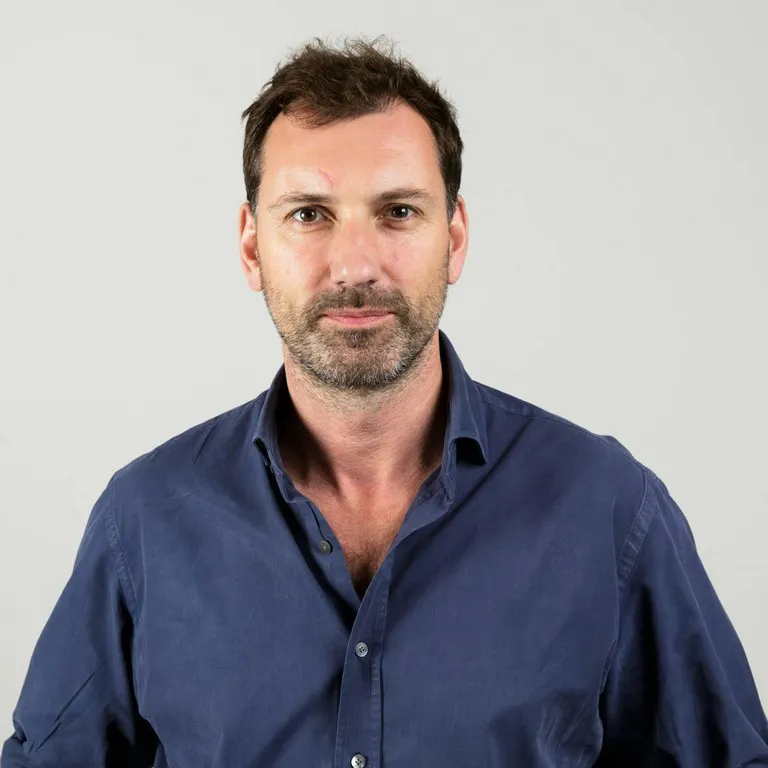
Douglas Johnson-Poensgen, co-founder & President
Vf Circulor Founder Palmer
Giles Palmer, CEO

We were introduced to the Circulor team by our friends at Systemiq. Supply chain transparency shifted from nice-to-have to must-have after COP26, as institutional investors and regulators began demanding detailed net-zero plans. Our diligence showed that Circulor had the most mature, proven and complete technology to track complex supply chains, especially for high-risk, high-human-impact materials.

Circulor's platform assigns a digital fingerprint to strategic commodities and logs every event in their journey onto a blockchain: each change of hands, transformation and movement, captured through QR codes, sensors and scales for accurate, reliable inputs. Machine learning then turns that into real-time visibility across traditionally opaque supply chains, surfacing anomalies such as ethical breaches, fraud or batch errors, and measuring embedded carbon and water use across production, recycling and end of life.

Beyond the product, the team had a track record deploying in complex supply chains like batteries and in regions traditionally difficult to operate in, like Rwanda and the Congo. We were impressed by the founding team, Douglas Johnson-Poensgen, Veera Johnson and Coenraad van Deventer, who combined enterprise software expertise, supply chain operational experience and ESG conviction. Douglas has since been named among TIME's 100 most influential climate leaders of 2025, and in May 2025 Giles Palmer joined as CEO to lead the next phase of global scaling, with Douglas continuing as President.

Circulor continues to deepen its position in battery passport infrastructure, partnering with Powin on passports for utility-scale energy storage. The EU Battery Regulation, now in force, makes traceability a compliance requirement, cementing Circulor's category for years ahead.

CO-INVESTORS
  • Salesforcelogo
  • Y10 Circulor Systemiq 180px
  • Y12 Circulor Volvo Cars Tech Fund 180px
  • Y10 Circulor In Motion 160px
Hear more
on the company
Circulor Video
play video
Close
  • CHALLENGE
  • WHY DID WE INVEST?
Sign up here to receive news & insights