



We have tracked the fertility space for years, looking for the right company to address one of the most universal and underserved challenges in medicine. Infertility affects 1 in 6 people worldwide. It crosses every income level and geography. And yet the technology used to treat it has barely changed since the 1970s, leaving a Nobel Prize-winning therapy out of reach for the vast majority who need it.
What drew us to Conceivable was simple: this is not an unsolvable problem. It is an engineering problem. And the founding team had the domain depth and the ambition to solve it properly, not at the margins, but by rebuilding the IVF lab from scratch.
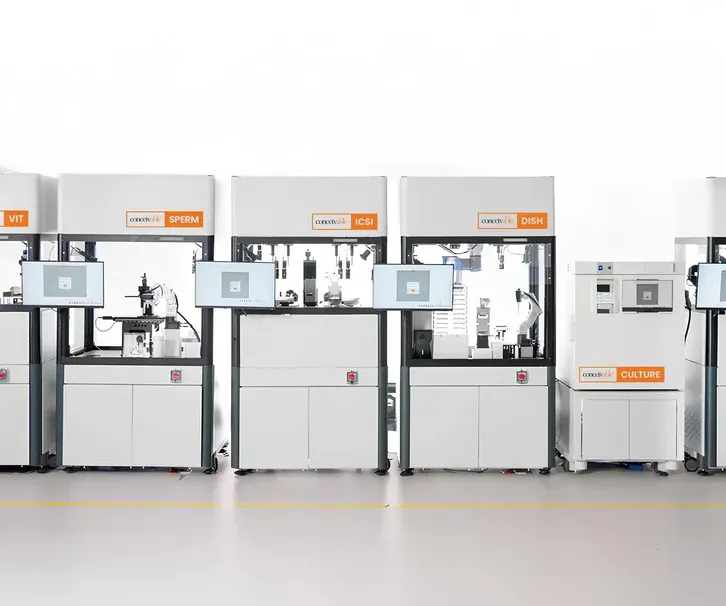
Together they built AURA: a 17-foot, 4,500-pound robotic assembly line and the only system in the world capable of performing every step of IVF outside the human body. Six integrated instruments handle the full process, from sperm preparation to embryo storage, standardizing more than 200 steps that have long depended on manual skill. The business model is as radical as the technology. By partnering with OB/GYNs, Conceivable enables clinicians to offer IVF without a multimillion-dollar lab, designed to run 2,000 cycles a year with just three staff members, and targeting a 70% reduction in cost per cycle.
The clinical results have followed. An earlier IRB study produced 21 pregnancies at a 51% success rate, without genetic testing, rivalling the world's top fertility clinics. AURA has since helped bring 20 children to life across clinical trials. The peer-reviewed paper on the first fully automated ICSI live birth won the Robert G. Edwards Prize for best original paper of 2025 and became the most downloaded paper in Reproductive BioMedicine Online that year, with over 16,000 downloads. When industry leaders visit the live lab in Mexico City, they consistently describe the same thing: a sense of inevitability.