
Nuevo Tangible Section2 Challenge

Tangible

Turning climate hardware into bankable debt assets

Tangible is the capital stack co-pilot for climate hardware. The platform turns gigafactories, heat pumps and e-mobility fleets into bankable assets institutional debt markets can underwrite at scale.

6960bf71b52959589c7d2267 4 0 00 00 00
6960c0596f9d1b5533420801 6 0 00 00 00
Their mission
To get climate hardware funded at trillion scale
Challenge
Financing climate hardware
HQ
London, UK

Their UVP

Through a standardised platform connecting climate hardware operators to asset-backed lenders, Tangible is turning bespoke debt deals into a repeatable financing layer institutional capital can deploy.
Tangible sub image
Grand challenge

Financing climate hardware

$68T
Debt capital required to fill the global hard asset and climate infrastructure gap by 2040, creating a massive bottleneck for early-stage operators.
10x
The factor by which private credit dwarfs venture capital. Tangible is building the infrastructure to route this massive, underutilized pool of debt capital directly to early-stage hardtech founders.
5min
Time it takes for a hardtech founder to generate a personalized capital roadmap, replacing weeks of manual spreadsheet modeling.
0% dilution
The amount of equity founders have to give up to fund their physical assets when routing their capital stack through Tangible’s debt platform instead of relying on venture capital.

The energy transition runs on physical assets. Gigafactories, heat pump fleets, EV charging networks, green hydrogen electrolyzers — the hardware that decarbonises industry cannot be conjured from software. It has to be built, financed, and deployed at a scale that venture equity was never designed to carry.

The mismatch is structural. Venture capital finances ideas and teams. The moment a climate hardware company needs to move from prototype to fleet, from pilot to network, it hits a wall. Physical assets require debt. Debt markets were built for energy majors and infrastructure funds operating at hundreds of millions. A $5 million asset-backed deal costs almost as much to diligence and structure as a $500 million one. The fixed costs of underwriting make small deals uneconomical for institutional lenders. The result is a financing gap that has nothing to do with the quality of the technology or the ambition of the team.

Private credit is approaching $3 trillion under management globally and is expected to double by 2028. The capital is not missing. What is missing is the infrastructure to route it efficiently to the operators who need it most, the early-stage builders who have real assets, real cash flows, and no way to access the debt markets that could fund their next phase of growth without giving up equity they cannot afford to lose.


Why did we invest?

Finance the trillions the climate transition needs

Tangible team
FOUNDERS
Tangible Founder Godfrey FIXED
William (Will) Godfrey, co-founder and CEO
Tangible Founder Dahanukar FIXED
Aishwarya Dahanukar, co-founder and CCO
Tangible Founder Saboune FIXED
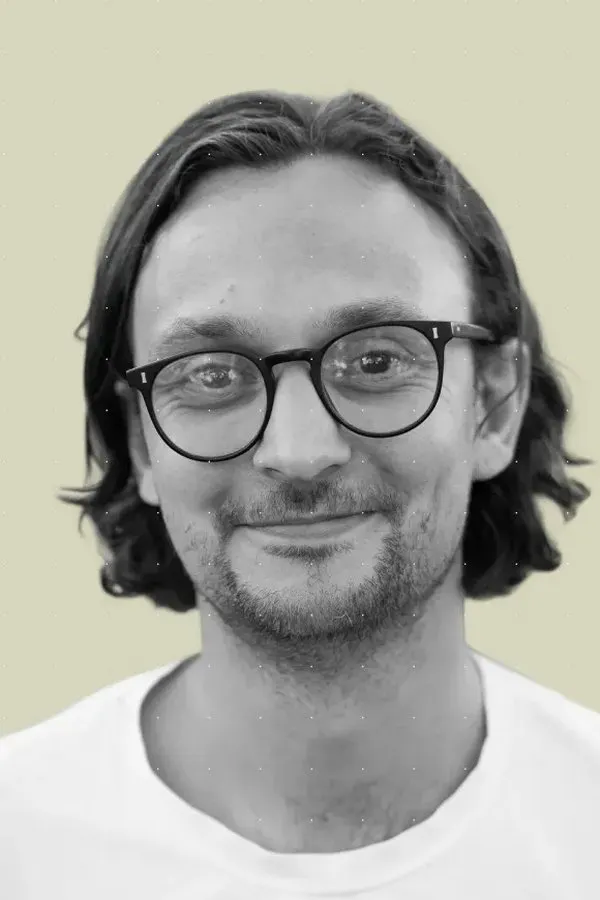
Sebastian Sabouné, co-founder and CPO

Climate hardware has spent the last decade running into the same wall. Strong teams, real assets, working technology, then a financing dead end that has nothing to do with the underlying business. Venture funds the idea. It breaks down the moment a company needs to deploy capital into physical assets. Project finance and structured debt could close the gap, but the plumbing was built for energy majors, not for an early-stage operator raising its first hundred million against a fleet of batteries or a network of charging stations.

The capital exists. BlackRock estimates $68 trillion of debt capital is required to fill the global infrastructure gap by 2040. Private credit is approaching $3 trillion under management and is expected to double by 2028, dwarfing venture by nearly an order of magnitude. What does not exist is the infrastructure to route it to the right borrowers at the right stage. A $5 million asset-backed deal costs nearly as much to diligence, structure, and monitor as a $500 million one. Fixed costs eat the margin. Lenders rationally ignore smaller borrowers. Founders accept crushing dilution or stall. That is not a failure of technology or ambition. It is a capital stack that was never designed for them.

Mastering structured finance is not a reasonable ask of a team simultaneously solving electrolyzer chemistry or grid interconnection. It took investment bankers entire careers to learn. Will Godfrey brings that hardware venture lens, having watched companies with real traction fail on financing rather than technology. Sebastian Sabouné brings deep product and software experience. Aishwarya Dahanukar spent her career in investment banking before joining as Chief Commercial Officer. The combination is not accidental. It is the precise skillset the problem demands.

Tangible is the capital stack co-pilot for ambitious hardtech companies: the fastest path from first term sheet to a debt structure that scales, covering preparation, lender matching, and facility management in one platform. Revenue scales with assets under administration. Their incentives are aligned with capital actually deployed, not just deals closed.

The energy transition will not be financed through venture equity. It will be financed through debt, structured against assets that generate predictable cash flows. What has been missing is the layer that makes that financing accessible to the operators actually building. Tangible is building that layer. That is why we invested.

CO-INVESTORS
  • NEW Tangible Logo 04 HCVC
  • LL Tangible Pale Blue Dot
  • LL Tangible MMC
  • 08 coinvestor 3 Black Wood
  • CHALLENGE
  • WHY DID WE INVEST?
Sign up here to receive news & insights